

In the daily use of solar systems, many users encounter a puzzling phenomenon: at noon, when sunlight is strongest, the solar panel can clearly output more power, yet the charging current displayed on the controller screen gets “stuck” at a certain value and stops rising. The user‘s first reaction is often — “Is the controller broken?” or “Did I buy a product with inflated ratings?”
In reality, this is exactly how the controller is supposed to work. The mechanism behind this phenomenon is called current-limited charging.
To understand current-limited charging, you first need to understand the physical characteristics of batteries. A battery is not a “bottomless pit” — there is a limit to the maximum charging current it can accept.
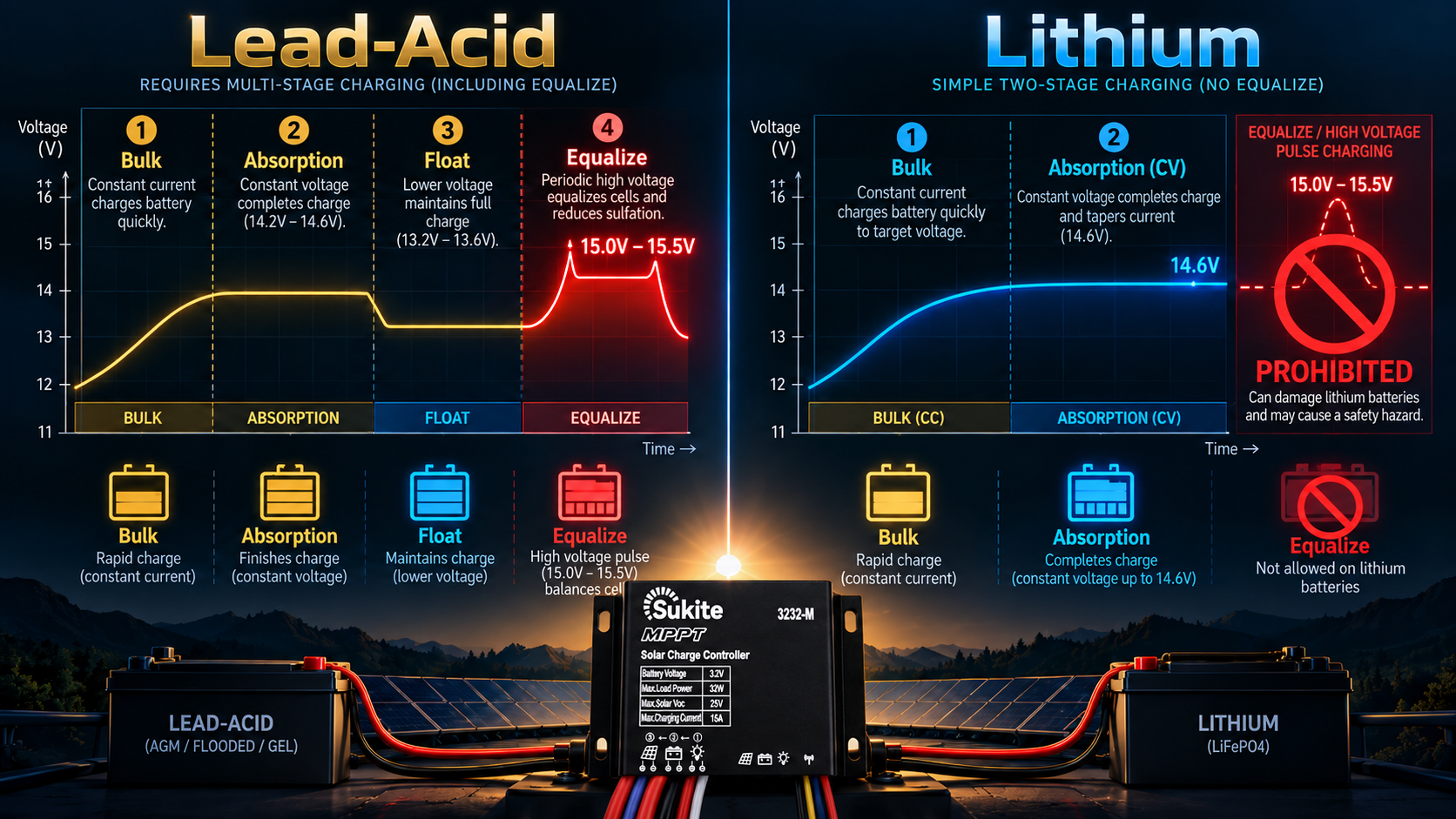
For lead-acid batteries, manufacturers typically recommend keeping charging current between 10% and 20% of battery capacity. That is, for a 100Ah lead-acid battery, the ideal charging current is roughly 10A to 20A. If charging current consistently exceeds this range, a series of adverse reactions occur inside the battery: electrolyte temperature rises, water is electrolyzed into hydrogen and oxygen at an accelerated rate (gassing), and active material on the plates sheds faster. These reactions directly shorten battery life and, in severe cases, can cause swelling or damage.
For lithium batteries, although they can accept higher charge rates, they also have limits. Exceeding the safety threshold set by the BMS (Battery Management System) causes internal pressure to rise, leading to irreversible damage.
This is why the controller must “limit” charging current — it’s not that the solar panel can’t produce more power, but that the battery can’t “swallow” more power.
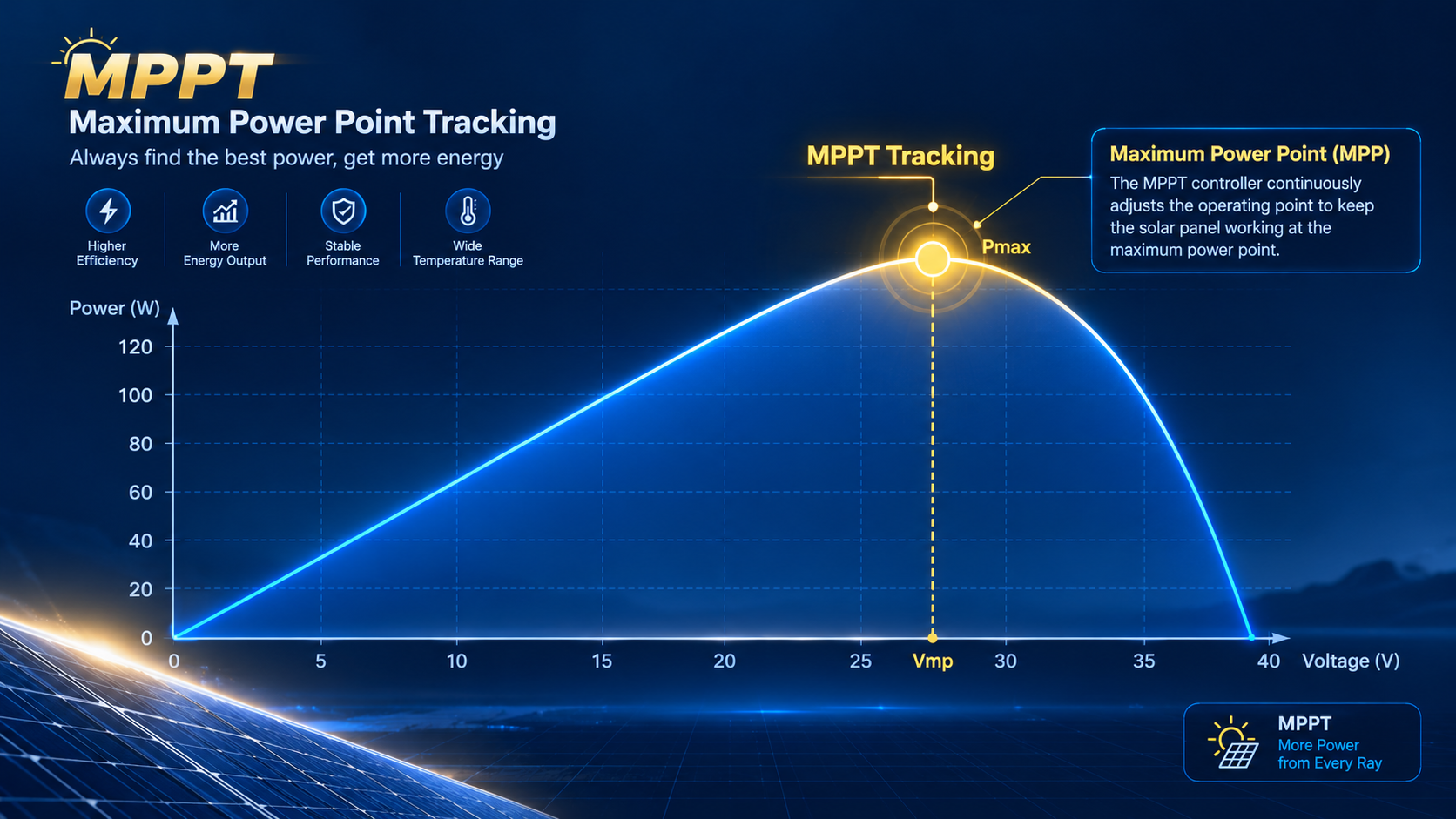
An MPPT controller‘s operating state is not static. It dynamically switches between two modes based on the battery’s acceptance capacity.
When battery voltage is low and charging current has not reached the threshold, the controller operates in MPPT mode. It goes all-out to track the solar panel‘s maximum power point, delivering as much energy as possible to the battery.
When charging current reaches the controller’s set threshold, the controller actively “exits” MPPT mode and transitions to constant current charging mode. In this mode, the controller no longer pursues “squeezing” every watt from the solar panel, but stabilizes output current at a safe set value. Excess energy is “abandoned” — but this is a deliberate, protective abandonment.
EPEVER controller manuals explicitly state this logic: “Limit the charging power & charging current to no higher than the rated value.” This seemingly simple technical description reflects the controller‘s prioritization of battery safety.
When light weakens and current naturally drops, the controller automatically switches back to MPPT mode, resuming efficient tracking. This dynamic switching process is continuous and real-time — users typically only notice it through changes in the current value on the screen.
When users see charging current being “capped,” their instinct is to feel that “solar energy is being wasted.” But in reality, the value of current-limited charging far exceeds the “loss” of that bit of power.
First, it protects battery lifespan. Excessive charging current causes battery heating, gassing, and accelerated plate aging. Current limiting keeps charging current within a safe range, significantly extending battery cycle life. For off-grid systems, the battery is often one of the most expensive components — protecting the battery is protecting the investment.
Second, it avoids safety hazards. Overcharging lead-acid batteries can cause case swelling or even rupture; overcurrent in lithium batteries can trigger thermal runaway. Current-limited charging reduces these risks at the source.
Third, it improves overall system efficiency. It may seem like the solar panel’s peak power is being “wasted,” but in reality, if that “abandoned” power were forced into the battery, it would convert into heat rather than useful storage. Current-limited charging allows energy to be absorbed by the battery at higher efficiency, reducing thermal losses.
The current limit threshold is not a fixed value — it is set according to battery type and capacity.
For lead-acid batteries, typical charging current is set at 10%-20% of capacity. For a 200Ah lead-acid battery, the current limit threshold might be between 20A and 40A.
For lithium batteries, especially LiFePO₄, the allowable charge rate is typically higher (up to 0.5C or even 1C), but must still remain within the BMS’s management range. The controller needs to work in coordination with the BMS to ensure charging current does not exceed the battery‘s safety limit.
This is why the controller requires explicit “battery type” selection — the current limit thresholds and charging curves for lead-acid mode and lithium mode are completely different. Choosing the wrong mode can either disable the current limit protection or make it overly conservative, resulting in slow charging.
First, don’t panic when you see current being “capped.” This is not a malfunction — the controller is protecting the battery. Especially at noon when sunlight is strongest, current-limited charging is normal.
Second, when selecting a controller, check whether the “rated charging current” matches battery capacity. If the controller’s rated current is too high while battery capacity is small, current limiting will frequently engage, and the solar panel‘s potential cannot be fully realized. If rated current is too low, charging speed will always be limited. Matching is more important than “bigger is better.”
Third, don’t arbitrarily raise the current limit threshold just to “charge faster.” Exceeding the battery manufacturer’s recommended charging current may improve charging speed in the short term, but battery lifespan will be significantly shortened in the long term. The controller‘s default current limit setting is typically an engineering-validated safe value.
The controller “limiting” charging current is not a sign of insufficient performance — it is a deliberate protection mechanism. It acts like an experienced charging manager who knows how much the battery “can eat” and feeds it exactly that amount — no more, no less. The solar panel producing more power is a good thing, but allowing the battery to absorb that power safely and with longevity is the key to long-term stable system operation.
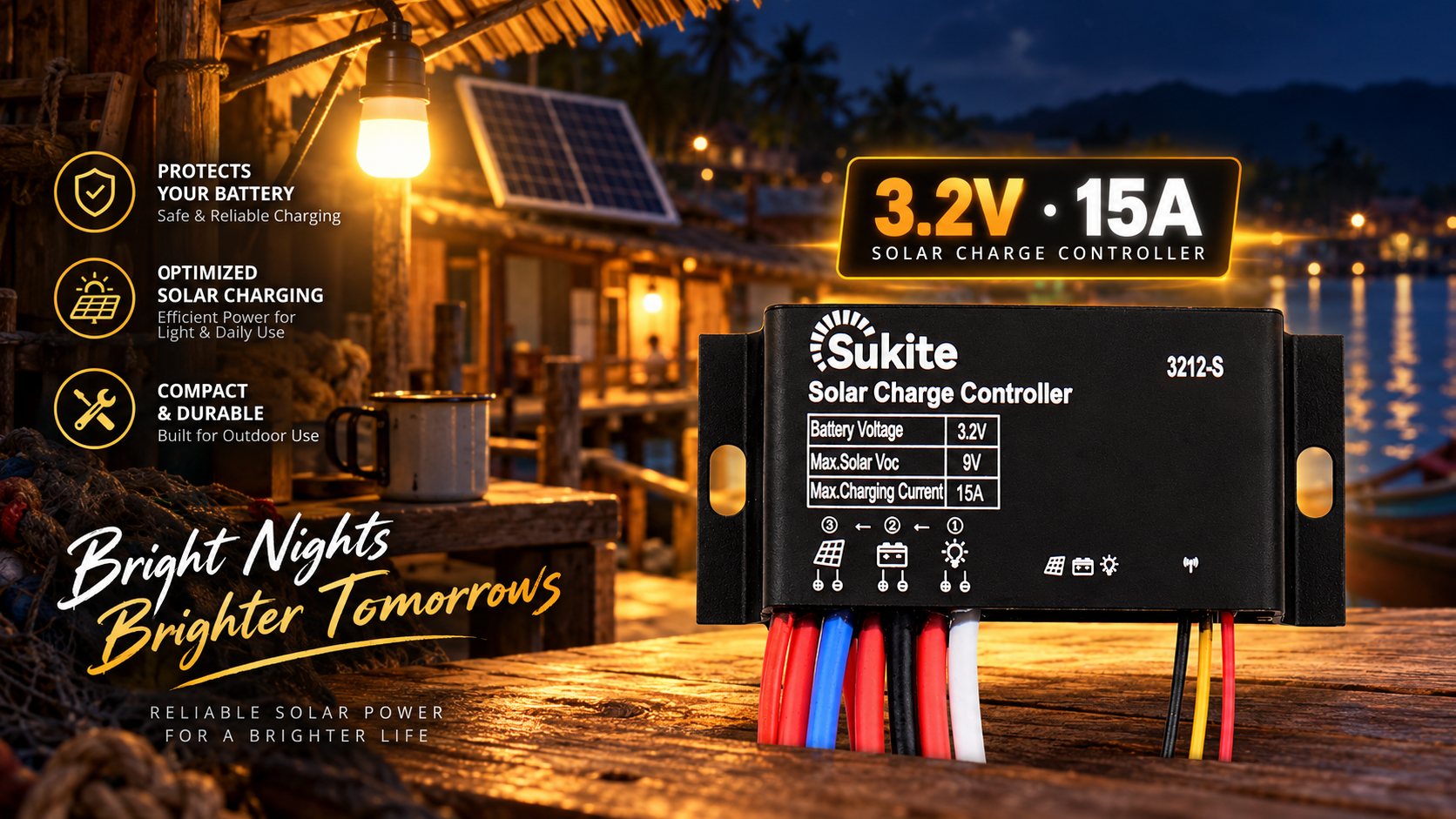
For Sukite, the current-limiting logic in charging management is a core manifestation of its battery protection capability. Understanding this allows users to view the controller’s behavior correctly and configure their solar systems more scientifically.
Fill out the form below and our team will get back to you within 24 hours.
Your inquiry has been submitted successfully. Our team will contact you within 24 hours.