Off-Grid Solar in East Africa Costs $0.20/kWh — Four Times Cheaper Than Grid Extension
UN Report Reveals: Distributed Solar Becomes the Only Economically Viable Solution for Rural Electrification in East Africa
Stay updated with the latest product launches, industry trends, and SUKITE company news.
UN Report Reveals: Distributed Solar Becomes the Only Economically Viable Solution for Rural Electrification in East Africa
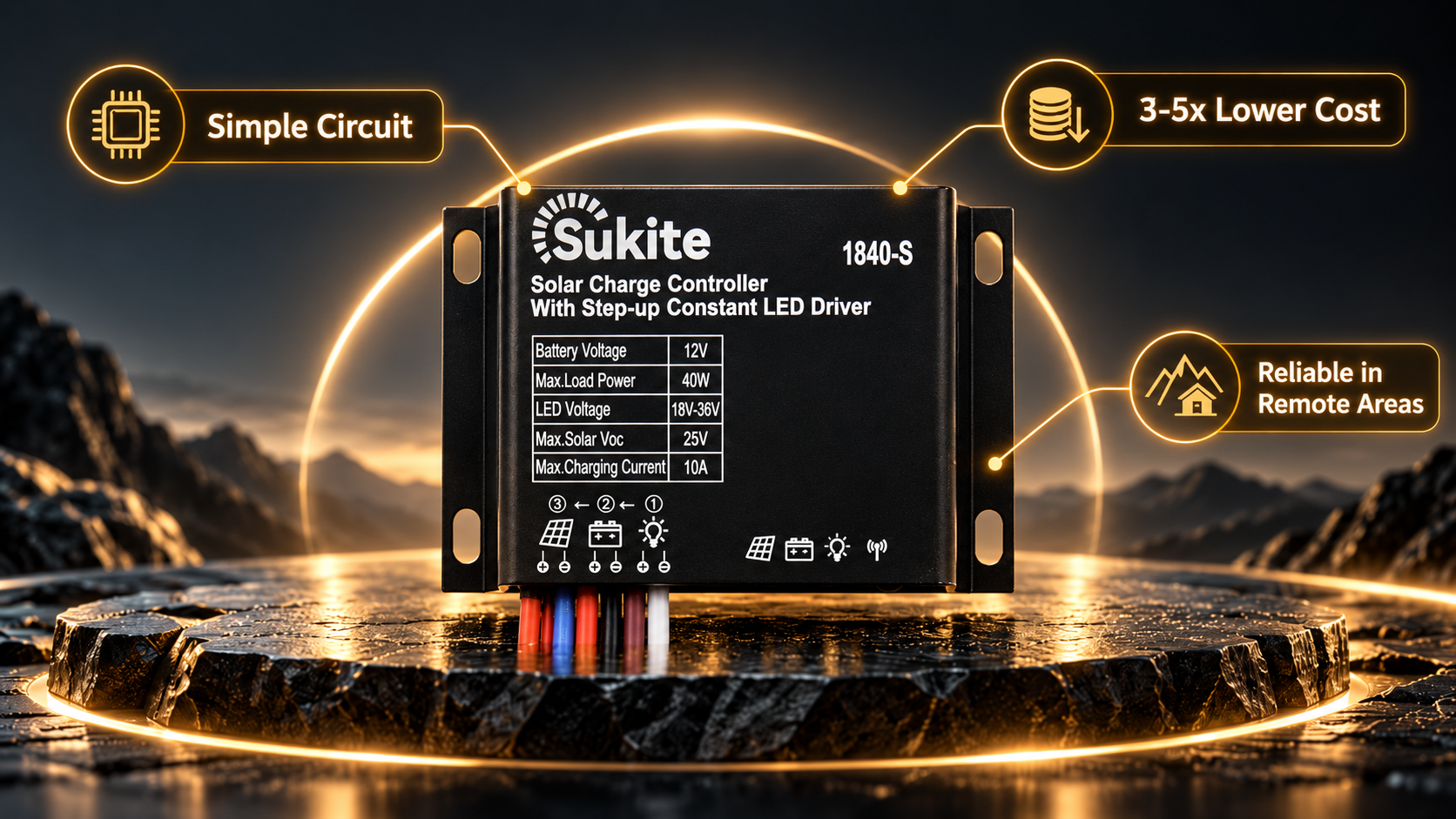
10A Charging, 40W Load, 50V Solar Input — Purpose-Built for 12V Security Cameras and Off-Grid Equipment Running Around the Clock
Hundreds of Millions Still Lack Electricity Access — Off-Grid MPPT Controller Market to Exceed $2.12 Billion by 2032
Asia-Pacific Leads with 34.82% Market Share, Smart Controllers Become Fastest-Growing Segment September 8, 2026 — According to the latest industry research report from Fortune Business Insights, the global solar charge controller market was valued at **$3.11 billion** in 2025 and is projected to reach $16.04 billion by 2034, growing at a remarkable compound annual growth rate (CAGR) of 20.00% during the forecast period from 2026 to 2034. This robust growth trajectory signals unprecedented market opportunities for solar charge controllers — the "intelligent brain" of PV systems.
From "Isolated Power Sources" to "Cloud-Managed Assets" — IoT Technology Is Redefining the Value of Off-Grid Solar September 2026 — At water monitoring stations in remote mountains, off-grid streetlights in African villages, and communication base stations on Southeast Asian islands, solar PV systems are nothing new. But for a long time, these installations shared one common characteristic — they were "silent islands." After installation, maintenance personnel could only visit sites periodically to check equipment status. They could neither obtain real-time battery levels nor remotely troubleshoot failures. This is now changing. The Internet of Things (IoT) is converging with solar charge controllers, transforming PV systems from "mute devices" into "smart terminals that can talk, sense, and respond."
30W Output, 8A Charging, IP67 Protection — Precisely Engineered for 12V Solar Street Light Systems September 2026 – Dongguan Sukite New Energy Lighting Co., Ltd. has introduced the Model 1230-G MPPT solar charge controller, purpose-built for LED lighting applications. The device seamlessly integrates Maximum Power Point Tracking (MPPT) technology with a step-up constant current LED driver into a single compact unit, delivering a true "2-in-1" high-efficiency charging and lighting control solution for 12V solar street light systems. This integrated design promises to significantly simplify system architecture while reducing overall installation costs.
Record $25 Billion Flows into Hybrid PV-Battery Projects as Investors Accelerate Deployment of Next-Generation Flexible Energy Assets September 1, 2026 – Global renewable energy investment reached $327.5 billion in the first half of 2026, maintaining a consistently high level, according to data from BloombergNEF (BNEF). While total investment moderated from the all-time peak recorded in the second half of 2024, a positive and profound structural shift is taking place. Investors and developers are accelerating their transition from standalone utility-scale solar toward co-located solar-plus-storage projects — a trend signaling that the renewable energy industry is moving from a phase of "capacity expansion" to one of "quality enhancement."
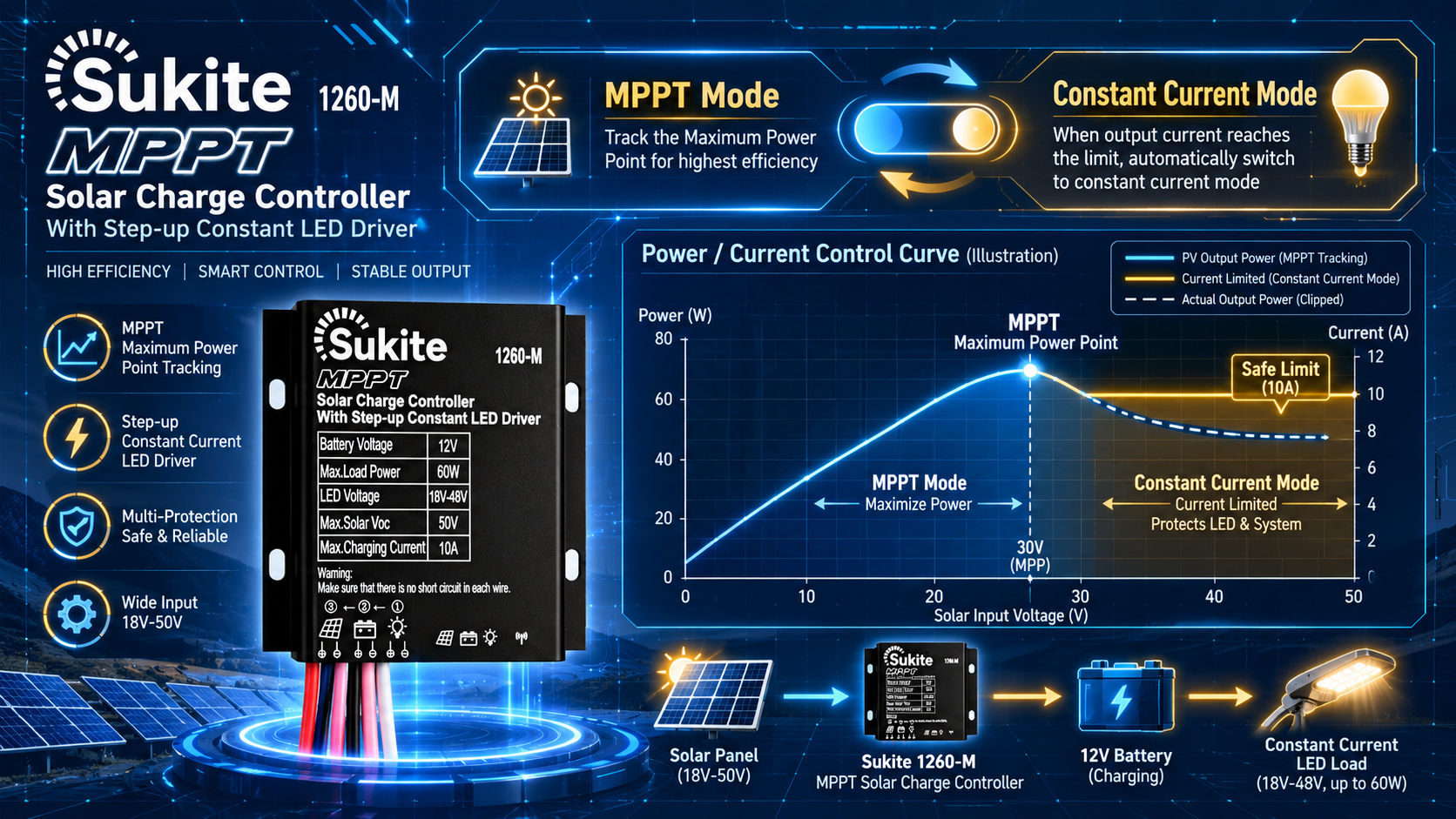
While MPPT solar charge controllers dominate industry conversations with their "high-efficiency" credentials, another technology — the PWM (Pulse Width Modulation) controller — continues to play an irreplaceable role in the global solar market. With mature technology, affordable pricing, and proven reliability, it remains the classic choice for small off-grid PV systems.
In a solar street lighting system, the charge controller is often referred to as the "brain" — it manages the charging of the battery from the solar panel, controls the discharging, and switches the load on and off. It directly determines the lifespan and lighting performance of the entire system. Yet, many installers and end-users face a fundamental question when selecting a controller: MPPT or PWM — which one is right for my project? Today, we provide a clear and practical guide from three perspectives: working principles, application scenarios, and cost-effectiveness.
Fill out the form below and our team will get back to you within 24 hours.
Your inquiry has been submitted successfully. Our team will contact you within 24 hours.