

A PWM solar charge controller represents the earlier technological path in photovoltaic control systems. Unlike MPPT controllers, which incorporate DC-DC conversion circuits, a PWM controller connects the solar array and battery through a single power switch. It regulates current input by rapidly switching the charging signal on and off, gradually reducing the power delivered to the battery as it approaches full charge.
This seemingly simple electrical architecture gives PWM controllers three core advantages: simple circuitry, high reliability, and affordable pricing. They still provide comprehensive battery charge/discharge management, effectively preventing overcharging, over-discharging, short circuits, and reverse polarity — all of which extend battery life.
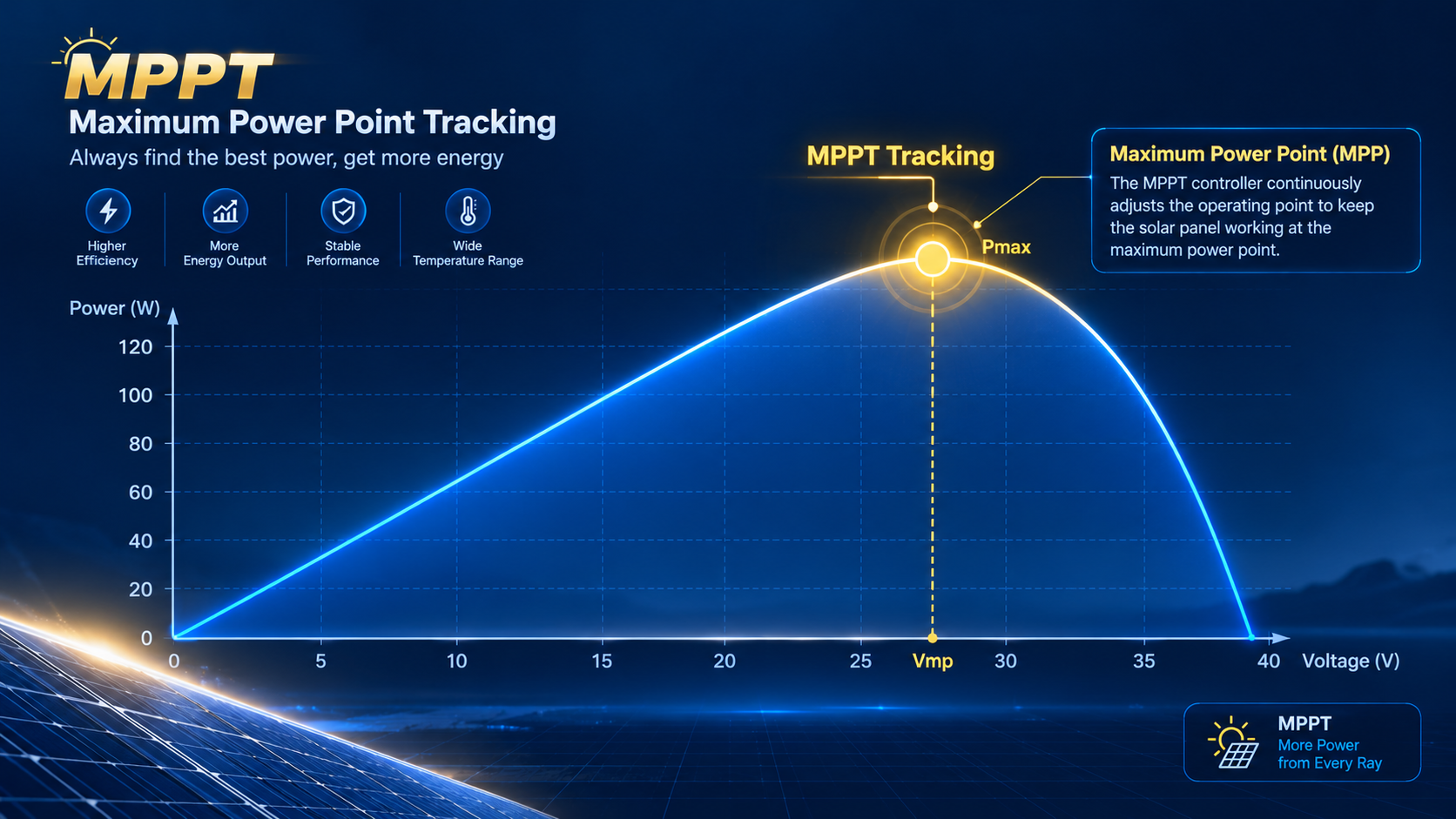
An analogy helps clarify: if an MPPT controller is like an intelligent continuously variable transmission (CVT) vehicle that automatically shifts to the most efficient gear, then a PWM controller is like a manual transmission car — the gear ratio is mostly fixed, so it cannot always operate at the engine's optimal RPM.
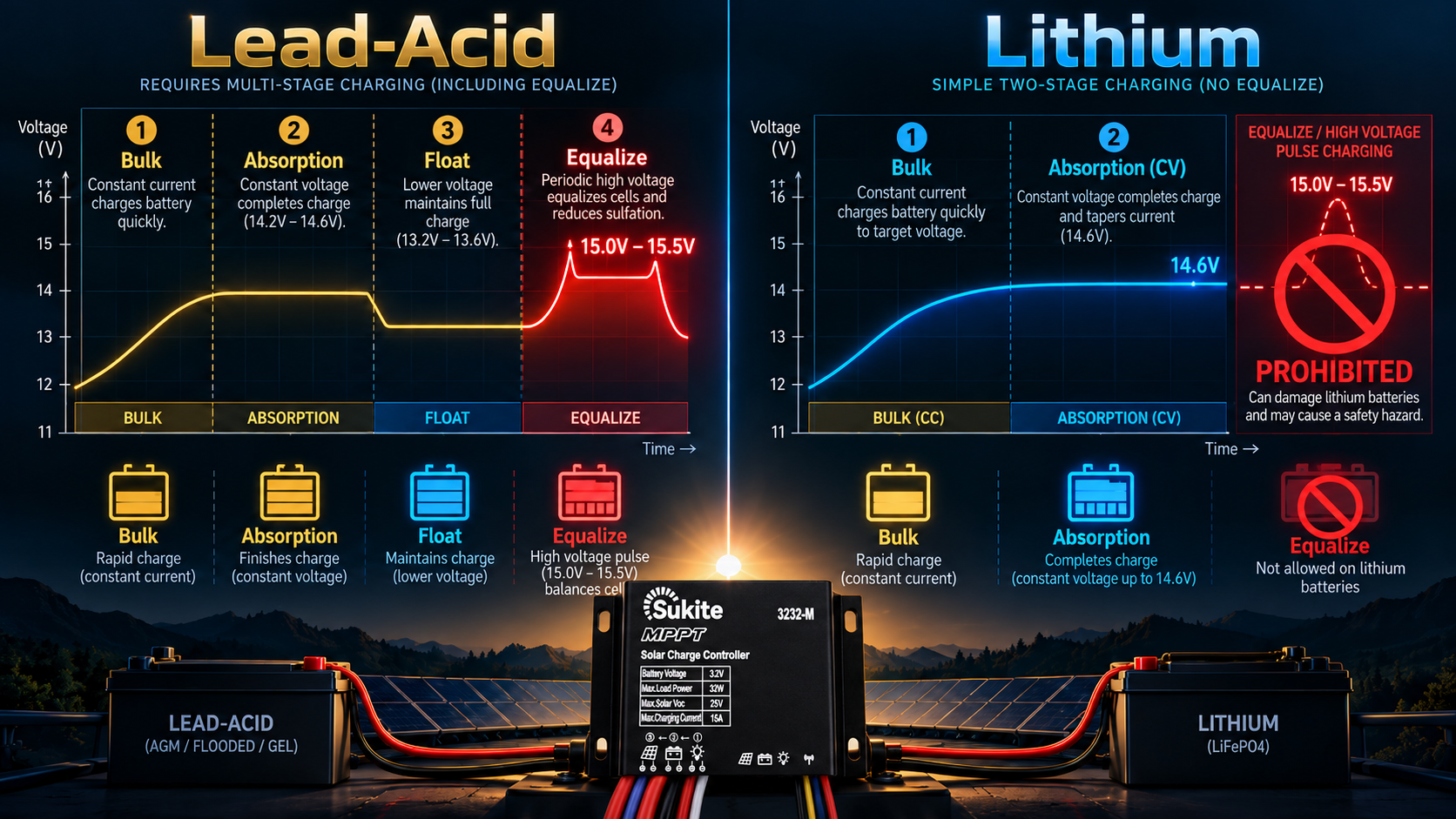
PWM controllers employ multi-stage charging management (bulk charge → absorption → float charge), intelligently following the battery's charging characteristic curve. This pulsed charging method offers a unique advantage: during the off periods, the oxygen and hydrogen generated by internal chemical reactions have time to recombine and be absorbed, naturally eliminating concentration polarization and ohmic polarization, reducing internal battery pressure, and allowing the battery to absorb more energy.
For these reasons, PWM controllers effectively address the common issues of batteries not reaching full charge and having short service lives, while also reducing cycle losses.
Admittedly, PWM controllers cannot keep the solar array operating at its maximum power point at all times like MPPT controllers can. Research indicates that overall efficiency for PWM controllers typically ranges between 65% and 85%, while MPPT can outperform by over 30% in cold conditions. Panel utilization also tends to be around 80% or higher.
This efficiency gap stems from design fundamentals: PWM controllers lack voltage-regulation components like inductors, so panel voltage must closely match battery voltage (e.g., a 24V battery requires 30-50V panels, with only one panel per string). This also means PWM controllers impose certain limitations on PV array design flexibility.
The true value of PWM controllers lies in their cost-effectiveness across the following scenarios:
Small Off-grid Systems: For systems under 2kW — commonly used for lighting in remote mountainous regions and developing countries — users are highly price-sensitive. The integrated solution of a PWM controller paired with a modified sine wave inverter offers simple structure, easy wiring, and low cost, easily powering lights, small TVs, and fans.
RVs and Mobile Applications: PWM controllers are compact, lightweight, and easy to install. Some embedded controllers, for instance, measure just 2cm thin and feature magnetic backplates, making them ideal for space-constrained environments like RVs and boats.
Solar Streetlights and Security Systems: For small-to-medium solar applications such as courtyard lighting, traffic monitoring, and communication backup power, PWM controllers complete the core tasks of stable charging and basic protection at the lowest cost — making them the best value choice.
Continued market growth confirms PWM technology's enduring relevance. According to industry data, global PWM solar charge controller sales reached approximately **1.632 billion RMB (about $247 million USD) in 2025**, with projections to grow to 2.475 billion RMB by 2032, representing a compound annual growth rate of 5.9%. Global production reached approximately 6.857 million units in 2025, with an average selling price of around $35 per unit and gross margins maintaining a healthy range of 20%-40%.
The global market is currently served by both international and domestic brands, including Phocos, Morningstar, Victron Energy, Renogy, as well as Chinese manufacturers such as Shuori New Energy, Huineng Jingdian Technology, and Yuanfang Power.
The PWM controller is not merely a "cheap alternative" to MPPT — it is the optimal solution for specific application scenarios. With the simplest and most reliable circuitry and the lowest cost barrier, it brings solar power to the places that need it most.
When selecting a controller, there is no need to blindly pursue the "most advanced technology." If your system is under 2kW, your budget is limited, and your PV array design is straightforward, the PWM controller remains that trustworthy "reliable veteran."
Fill out the form below and our team will get back to you within 24 hours.
Your inquiry has been submitted successfully. Our team will contact you within 24 hours.