

While global attention focuses on utility-scale solar farms and grid-level energy storage projects, a United Nations report reveals a frequently overlooked reality: in East Africa, off-grid solar systems deliver electricity at one-quarter the cost of grid extension, making them the most economical path to electrification for millions.
The report, titled "PV Plus South-South Cooperation Opportunities: Solar Energy for Sustainable Development," coordinated by the UN Department of Economic and Social Affairs (UNDESA), provides a systematic analysis of energy access in East Africa. According to the report, the levelized cost of electricity (LCOE) for off-grid solar systems (24-hour supply) in East Africa is approximately $0.20/kWh**, compared to **$0.85/kWh for grid extension and $0.65/kWh for diesel generators.
Over a 20-year total cost comparison, the gap is even more striking: approximately $400,000** for off-grid solar, **$1.75 million for grid extension, and $1.3 million for diesel generation. This means that in remote rural areas, the full lifecycle cost of off-grid solar is less than one-quarter that of extending the grid.
Citing World Bank data, the report notes that energy poverty remains severe in East Africa. Among the 18 East African countries, six have overall energy access rates below 50%, and 12 have rural energy access rates below 50%, with four countries reporting rural electrification rates below 10%.
Although East Africa is not the least densely populated region in Africa, the high cost of extending the grid to rural and remote areas remains a fundamental barrier to electricity access. The report explicitly states: decentralized energy systems (such as off-grid and mini-grid solutions) have become the only economically viable electricity supply option for most rural communities.
According to International Energy Agency projections, electricity demand in Sub-Saharan Africa is expected to triple by 2040. In East Africa, meeting rapidly growing electricity demand while controlling costs has become a shared challenge for all countries in the region.
The report's core concept of "PV Plus" emphasizes deep integration of solar power with agricultural, industrial, and community energy applications — rather than simply building centralized power plants.
East Africa faces not only energy shortages but also severe food and water security pressures. The report notes that among the ten African countries with the highest levels of food insecurity, five are in East Africa — Kenya, Somalia, South Sudan, Zambia, and Zimbabwe. Frequent droughts caused by climate change and El Niño-induced flooding have further deteriorated food security conditions.
Against this backdrop, PV Plus agricultural systems demonstrate unique synergistic value: by providing clean electricity for irrigation, refrigeration, and processing, they address both energy access and agricultural productivity challenges. The report specifically emphasizes that promoting PV Plus agricultural systems in East Africa should leverage the advantages of solar panels — being lightweight, flexible, and low-cost — to integrate small off-grid or micro-grid systems into various agricultural activities, rather than simply replicating China's model of large-scale centralized power stations[9].
The report's analysis shows that PV Plus systems have positive impacts on 12 of the 17 UN Sustainable Development Goals (SDGs), spanning poverty reduction, zero hunger, gender equality, decent work, climate action, and more. This means an off-grid solar project delivers not just electricity, but comprehensive social development benefits.
The economic advantages of off-grid solar in East Africa are driving this market from an aid-dependent charity model toward a commercially sustainable development path.
Data shows that approximately 60% of global off-grid solar systems are deployed in Africa, with total installed capacity reaching 517MW, benefiting over 73 million people. Between 2020 and 2022, decentralized energy solutions contributed 55% of new electricity connections in Sub-Saharan Africa. Off-grid solutions have demonstrated greater resilience during macroeconomic fluctuations, making them an indispensable force in Africa's electrification process.
At the broader African solar market level, commercial and industrial (C&I) demand is accelerating. According to pv magazine, system costs for African C&I solar projects have dropped to $0.08-0.20/kWh**, compared to approximately **$0.38/kWh for diesel generation. Significantly improved economics are driving more businesses to choose solar for full off-grid operation or reliable backup power.
For solar charge controller manufacturers, the rapid growth of East Africa's off-grid solar market sends clear signals:
Extreme cost sensitivity: At a cost target of $0.20/kWh, the cost-effectiveness of every system component is critical. Controllers must offer the most competitive pricing while maintaining reliability.
Demanding environmental adaptability: High temperatures, humidity, and dusty conditions in East Africa impose higher requirements on controller protection ratings and thermal performance. Products with high-temperature tolerance and wide operating temperature ranges will have a competitive edge.
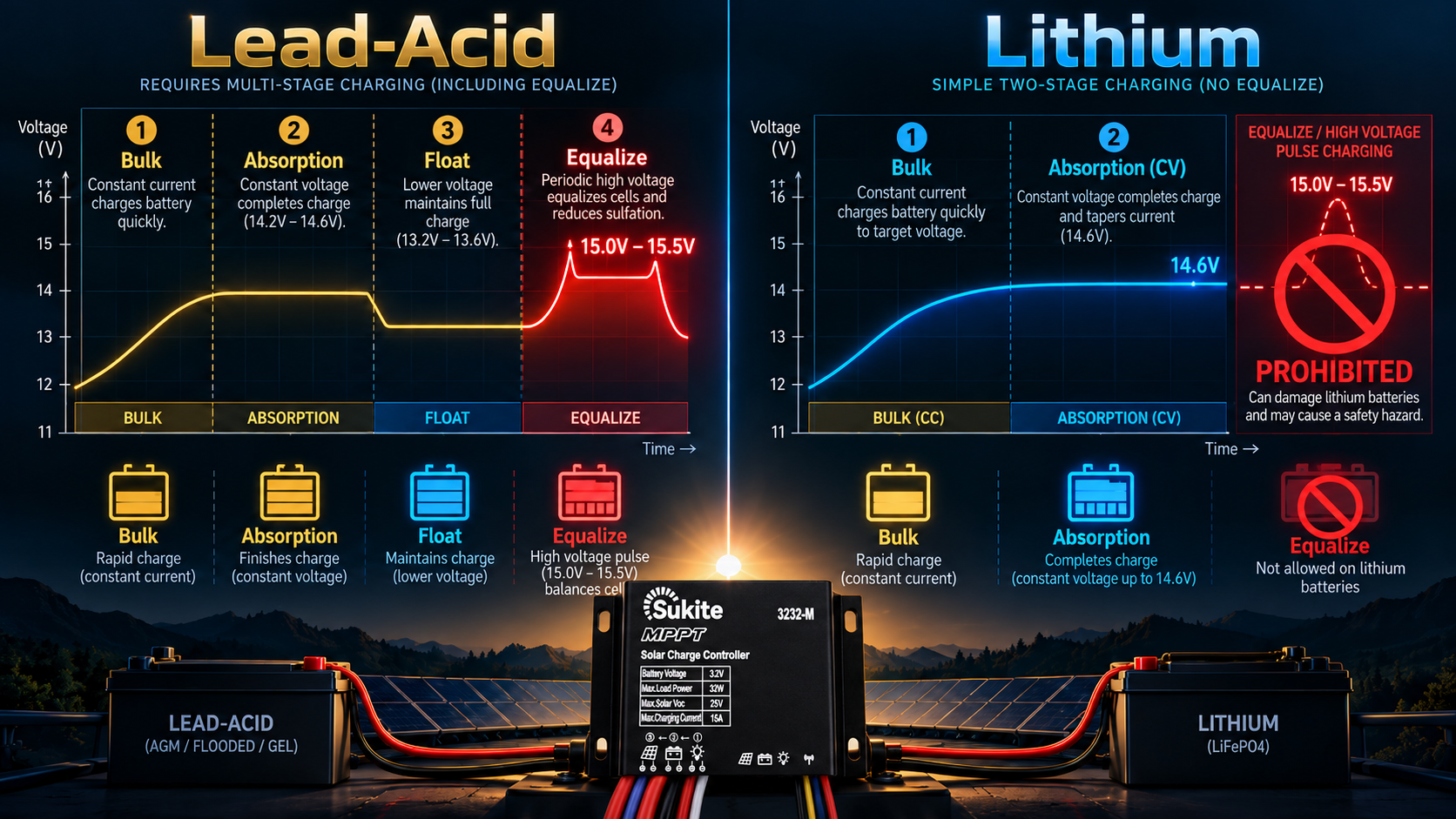
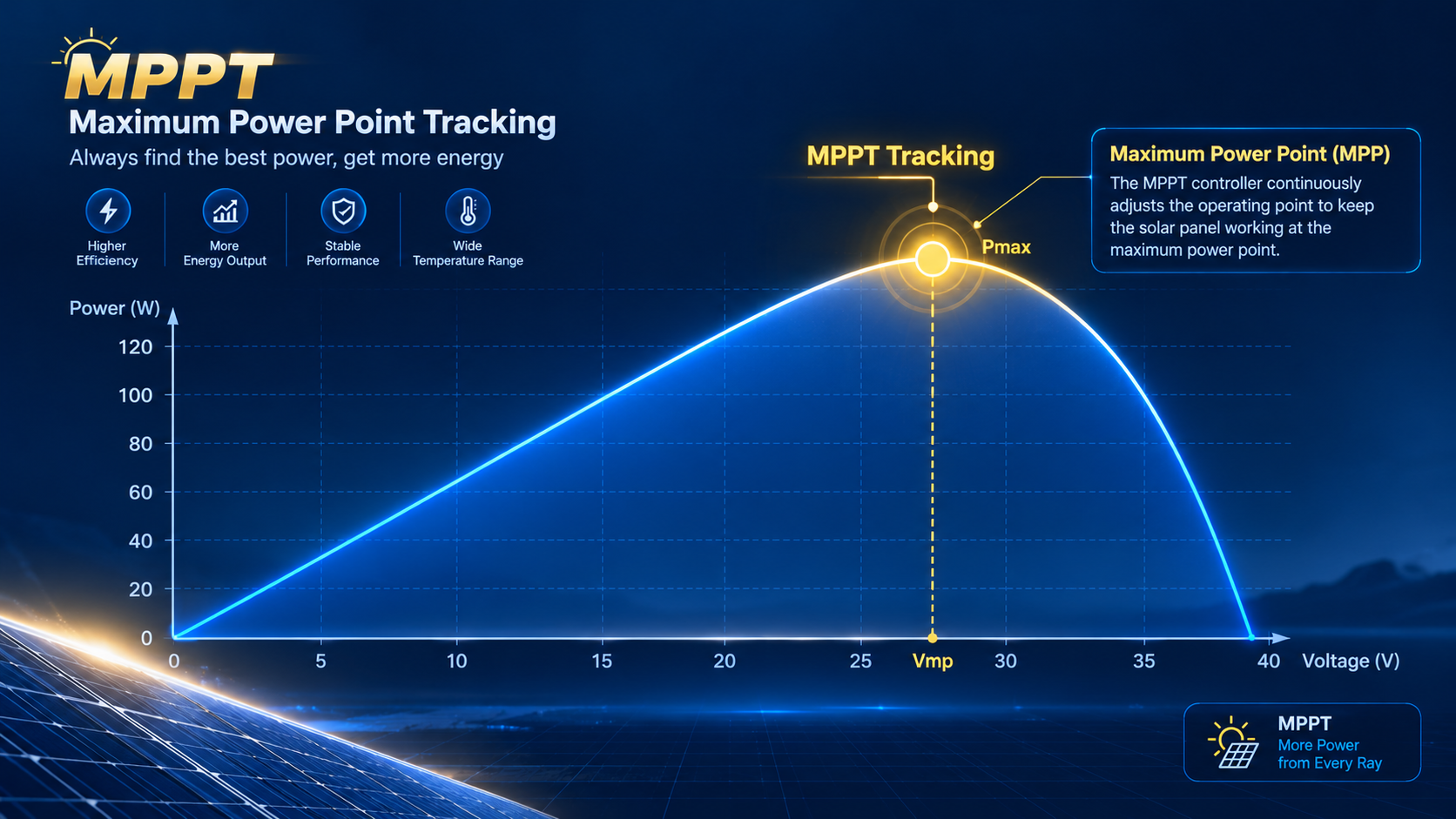
Clear technology adaptation needs: With the growing adoption of LiFePO₄ batteries in off-grid systems, demand for smart controllers supporting programmable charging curves and BMS communication continues to rise. MPPT controllers, with their 20%-30% charging efficiency advantage, have become the standard choice for off-grid systems.
Localized service is long-term competitiveness: The report identifies policy instability, insufficient community participation, and weak local O&M capabilities as four systemic bottlenecks causing off-grid project failures. Controller suppliers capable of providing localized technical support and after-sales service will build long-term competitive advantages in this market.
When grid extension costs four times more than off-grid solar, economics has already provided a clear answer. For the hundreds of millions awaiting electricity access in East Africa, distributed solar is not a "second-best" option — it is the optimal solution.
As solar module and battery storage costs continue to decline, and IoT technology enables remote operations and maintenance, the economics of off-grid solar systems will improve further. For controller manufacturers deeply engaged in this space, the East African market represents not just a business opportunity, but a historic opportunity to participate in the global energy equity process.
Data Sources: UN Department of Economic and Social Affairs (UNDESA) "PV Plus South-South Cooperation Opportunities" report, Peking University Institute of Energy, pv magazine International, and other publicly available research reports.
Fill out the form below and our team will get back to you within 24 hours.
Your inquiry has been submitted successfully. Our team will contact you within 24 hours.