

Solar street light projects across Africa, Southeast Asia and Latin America are frequently suffering unexpected failures caused by fake MPPT controllers. Unscrupulous suppliers repackage ordinary PWM controllers and mark them as MPPT to cut costs. Buyers end up with low charging efficiency, insufficient lighting at night, shortened battery lifespan and costly on-site maintenance.
Under strong sunlight, use a multimeter to measure PV terminal voltage and battery terminal voltage.
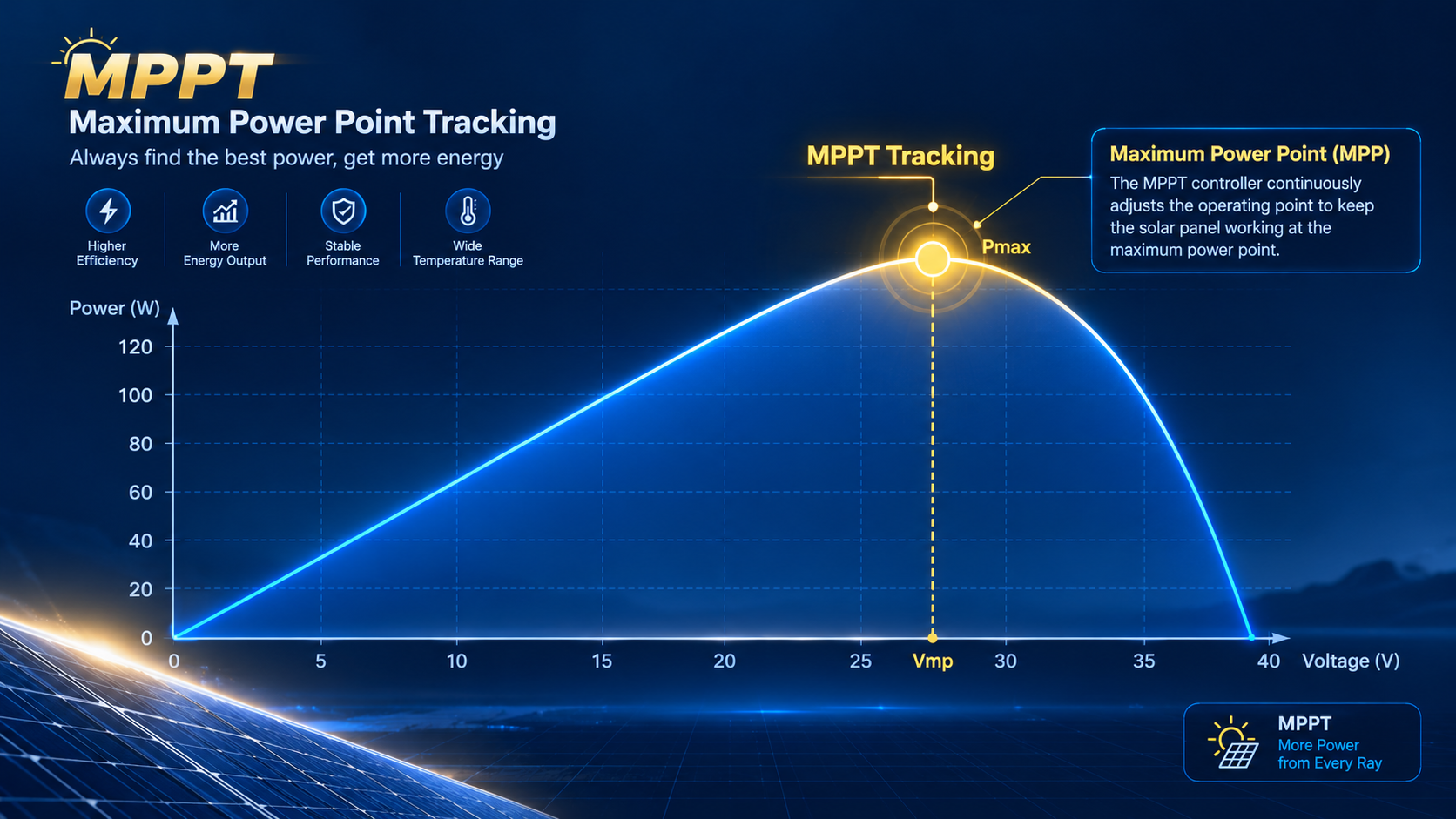
Cover part of the solar panel. Real MPPT will quickly recalculate and lock a new maximum power point. Fake products will have a sharp power drop without dynamic tracking.
Open the sample casing. True MPPT must contain a high-power copper inductor for DC-DC buck conversion. Fake PWM versions only carry simple small components without this core part.
Request official lab test reports. Qualified genuine MPPT solar street light controllers should achieve charging efficiency ≥95%.
Fake MPPT usually delivers 20%~30% less charging power. For off-grid street light projects, this directly leads to dim lights or blackouts on cloudy and rainy days. Batteries will suffer incomplete charging and accelerated aging, increasing your after-sales replacement cost and damaging project reputation.
Fill out the form below and our team will get back to you within 24 hours.
Your inquiry has been submitted successfully. Our team will contact you within 24 hours.